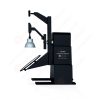
LM-79 Goniophotomètre à détecteur mobile (miroir de type C)
LSG-6000
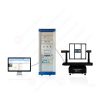
Goniophotomètre de luminaire à rotation de haute précision
LSG-1890B
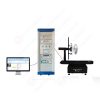
Goniospectroradiomètre de luminaire à rotation de haute précision
LSG-1890BCCD

Goniophotomètre pour automobile et lampes de signalisation
LSG-1950
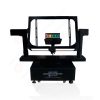
Goniophotomètre pour feux de signalisation routière (modèle économique)
LSG-1950S
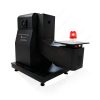
Dispositif d'alerte visuelle d'alarme incendie VAD Goniophotomètre
LSG-1930
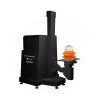
Goniophotomètre pour l'éclairage des pistes d'aérodrome
LSG-1940
Goniophotomètre compact
LSG-1200A
Goniophotomètre à LED
LSG-1100
Goniophotomètre à détecteur de champ proche
LSG-1900B
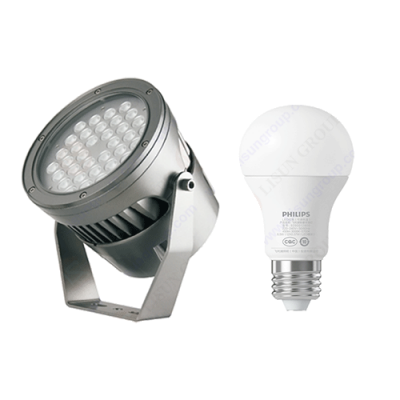 Solutions de test pour LED et luminaires
 LM-79 et LM-80 Solutions de test
 Solutions de test de pilotes LED
 Solutions de test pour appareils ménagers
 Solutions de test mobile et réseau
 Solutions de test pour l'électronique automobile
 Solutions de tests audio-vidéo et informatiques
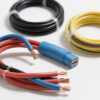 Solutions de test de câbles et fils
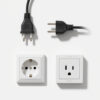 Solutions de test pour fiches et prises
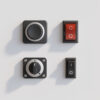 Solutions de test d'interrupteur d'alimentation
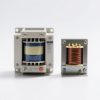 Solutions de test de transformateur
 Solutions de test pour jouets électriques
 Solutions de test de compteurs d'énergie
 Solutions de test d'outils motorisés
Sélectionnez une organisation
consulter les normes
Abstract
With the rapid development of new energy electric vehicles, on-board sensors and electronic control units (ECUs), as the core components for vehicle perception and control, are largely arranged in positions vulnerable to water exposure such as chassis, wheel wells and engine compartments. They must withstand complex operating conditions including high-pressure washing, high-temperature spraying and splashing rain and snow. An Automotive Components Waterproof Test Chamber can reproduce extreme water exposure conditions encountered in real vehicle operation within the laboratory, and quantitatively evaluate the capability of enclosure sealing structures to resist the intrusion of high-temperature and high-pressure water flow. Focusing on LISUN JL-9K1L High-Temperature & High-Pressure Water Jet Test Chamber, this paper discusses the role of the Automotive Components Waterproof Test Chamber in reliability verification for EV sensors and ECUs, analyzes the practical significance of IPX6K and IPX9K test conditions for automotive electronic components, introduces the technical features, applicable standards and practical application scenarios of the equipment, and provides references for laboratory construction and product reliability verification of vehicle manufacturers, component suppliers and third-party testing institutions.
The intelligence level of electric vehicles continues to rise, and the quantity of various sensors and ECUs equipped on the whole vehicle keeps increasing. Such precision electronic parts are directly related to key functions including power output, brake control and environmental perception. Many on-board electronic devices are installed outside the vehicle body or inside the cabin. During daily vehicle use, they will encounter scenarios such as high-pressure car washing, splashing road mud and water, and high-temperature flushing during maintenance. Once defects exist in the enclosure sealing structure, the intrusion of high-temperature and high-pressure water flow into the equipment will cause circuit board corrosion, signal drift, short circuit and other faults. In severe cases, it may directly trigger abnormal functions of the whole vehicle and bring potential driving safety hazards.
Ordinary rain and dripping tests can only simulate ambient-temperature rainwater environments and cannot replicate the impact effect of high-temperature and high-pressure water flow during car washing and maintenance cleaning. An Automotive Components Waterproof Test Chamber is specially developed for vehicle-grade pressurized waterproof test conditions. LISUN JL-9K1L High-Temperature & High-Pressure Water Jet Test Chamber, also known as high-temperature high-pressure waterproof test chamber, can simulate high-temperature high-pressure spray environments to carry out rigorous inspection and verification on the enclosure waterproof protection performance of various products. The JL-9K1L high-temperature high-pressure waterproof test chamber accurately controls spray pressure, water temperature, jet angle and test duration to restore the water exposure status of products under special working conditions, and assesses the impact of high-temperature high-pressure water flow on product sealing structures, surface materials and internal components. With a multi-function nozzle adjustment device and stable turntable operation, uniform water coverage on test samples is achieved. It can complete IPX6K and IPX9K grade waterproof tests and provide reliable test conditions for product R&D improvement and quality control. The equipment complies with domestic and international automotive electronic protection standards including GB/T 4208-2017, ISO 20653, IEC 60529 and DIN 40050-9, meeting the compliance testing requirements of on-board sensors, ECUs, connectors and other components.
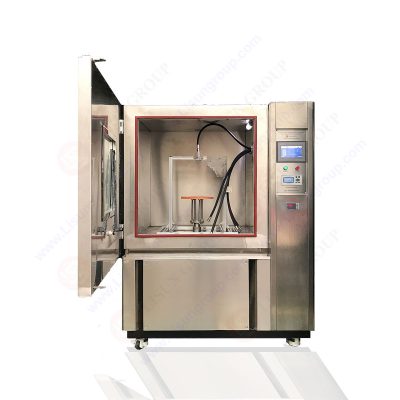
JL-9K1L Chambre d'essai étanche à jet de pression à haute température
On-board sensors include radar sensors, temperature sensors, pressure sensors, image perception assemblies and more. ECUs cover battery management systems, vehicle control units, body control modules and other parts. Enclosure seams, connector ports and breathable valve positions of components are high-risk points for water ingress. During high-pressure car washing, hot water with pressure from 8MPa to 10MPa impacts component enclosures from multiple angles. High temperature causes thermal deformation of sealing rubber parts, and high-pressure water flow penetrates into the housing along tiny gaps. Unlike ambient-temperature rainwater environments, high-temperature water more easily invades micro sealing gaps, and hot water accelerates corrosion of internal metal pins and PCB circuit boards. Many components can successfully pass normal-temperature IPX4 and IPX6 tests, but water seepage and internal condensation will appear after IPX6K and IPX9K high-temperature high-pressure spray tests.
Most of such water ingress defects will not be fully exposed immediately after testing, and will develop gradually during long-term vehicle operation, belonging to potential failure modes. If verification of IPX6K and IPX9K is not performed with an Automotive Components Waterproof Test Chamber in the R&D stage and only vehicle road tests are adopted, it is difficult to reproduce extreme working conditions of high-pressure hot water flushing. Defects will remain after mass vehicle assembly, resulting in large-scale after-sales faults in the later stage and increasing recall and maintenance costs for automakers. According to ISO 20653 Degrees of protection (IP code) for electrical and electronic equipment of road vehicles, on-board electronic components arranged in areas susceptible to flushing need to complete IPX6K or IPX9K grade tests to verify the reliability of sealing structures under the impact of high-temperature high-pressure water flow.
As a dedicated Automotive Components Waterproof Test Chamber, the JL-9K1L adopts high-quality stainless steel for both inner and outer chambers of the whole machine, resisting rust under long-term scouring by high-temperature hot water. The equipment is equipped with 4 sets of nozzles complying with IEC 60529 standard specifications. The spray angle supports four gear shifts at 0°, 30°, 60° and 90°. The multi-function nozzle adjustment device ensures that the 4 nozzles and the tested sample are on the same circular arc trajectory, and the jet angle remains stable when adjusting spray distance. The equipment is fitted with high-temperature resistant electronic flowmeters to stably control the spray flow at 14-16L/min, maintain spray pressure at 8-10MPa, and the maximum water temperature inside the chamber can reach 80±5℃. It also has protection mechanisms for temperature overload and water overflow. Two specifications of turntables with φ400mm and φ200mm are available, and the rotation speed is adjustable from 1 to 5r/min with frequency conversion. Samples rotate uniformly with the turntable to guarantee that all outer surfaces of samples receive high-temperature high-pressure water impact. Meanwhile, the equipment is equipped with a force calibration system to verify nozzle jet impact force and ensure test conditions meet standard clauses. The table below lists the main comparative parameters of JL-9K1L and other models in the same series:
| LISUN Modèle | JL-9K1L | JL-6K9K1L | JL-4K6K9K1L-R400 | JL-56K9K1L |
|---|---|---|---|---|
| Supported Waterproof Test Grades | IPX9K | IPX6K, IPX9K | IPX4K, IPX6K, IPX9K | IPX5, IPX6, IPX6K, IPX9K |
| Swing Tube Configuration | Aucun | Aucun | Swing tube with 400mm radius | Aucun |
| Dimensions de la chambre intérieure (L×P×H) | 1000×1000×1000mm | 1000×1000×1000mm | 1000×1000×1000mm | 1000×1000×1000mm |
| Max. Dimension & Weight of Test Sample | Diameter 350mm, max. 50kg | Diameter 350mm, max. 50kg | Diameter 350mm, max. 50kg | Diameter 350mm, max. 50kg |
| Water Temperature Control Inside Chamber | Max. 80±5℃, with overload and overflow protection | Max. 80±5℃, with overload and overflow protection | Max. 80±5℃, with overload and overflow protection | Max. 80±5℃, with overload and overflow protection |
| Pression de pulvérisation | 8-10MPa | 8-10MPa | 8-10MPa | 8-10MPa |
| Débit de pulvérisation | 14-16L / min | 14-16L / min | 14-16L / min | 14-16L / min |
| Vitesse de rotation du plateau tournant | 1-5r/min, frequency conversion adjustable | 1-5r/min, frequency conversion adjustable | 1-5r/min, frequency conversion adjustable | 1-5r/min, frequency conversion adjustable |
| Configuration supplémentaire | Force calibration system, large observation window | Force calibration system, large observation window | Force calibration system, large observation window | Force calibration system, large observation window |
In the product R&D and design stage, engineers use the Automotive Components Waterproof Test Chamber to conduct IPX6K and IPX9K tests for screening enclosure structures, sealing ring selections and connector sealing schemes. When water ingress or condensation appears after testing, weak sealing positions can be located, and iterative optimization can be performed on housing structures, sealing rubber hardness and assembly tightening torque, so as to resolve sealing defects at the sample development stage and reduce later mold modification costs. Some laboratories carry out failure comparison tests to compare the performance of components from different suppliers under identical high-temperature high-pressure spray conditions, providing objective test data for component selection.
In incoming component inspection and finished product delivery inspection, the Automotive Components Waterproof Test Chamber is used for batch sampling reliability verification to monitor fluctuations in production and assembly processes. Process problems such as improperly assembled sealing rings and insufficient housing screw torque will reduce the protection performance of the same batch of products. Sampling high-temperature high-pressure spray tests can intercept batches with abnormal processes and prevent unqualified components from flowing into vehicle assembly links. For third-party testing institutions, Automotive Components Waterproof Test Chamber such as JL-9K1L is the hardware foundation to perform IPX6K and IPX9K certification testing. Test results generated by the equipment can be used to complete component compliance reports and meet the access review requirements of OEMs. Samples can also be powered on during testing to simulate the actual energized working state of ECUs and sensors, and observe whether signal anomalies or communication interruptions and other energized failures occur during water flow impact, which is closer to real vehicle operating conditions.

When enterprises select an Automotive Components Waterproof Test Chamber, they should not only focus on single parameters such as pressure and water temperature, but comprehensively evaluate whether the equipment meets the full standard clauses. Firstly, nozzle specifications, angle distribution and jet distance must strictly comply with IEC 60529 and ISO 20653 standards. Deviations in nozzle geometric dimensions will directly change the water impact effect and lead to distorted test results. Secondly, the equipment needs to be equipped with a force calibration system for regular verification of jet impact force, ensuring traceability of test conditions and meeting the requirements of laboratory system audits such as CNAS. Turntable rotation stability is also important; uniform rotation of samples can guarantee uniform water impact on all surfaces of components. Attention should also be paid to safety protection configurations. Water temperature overload protection, water overflow protection, electric leakage and water shortage protection ensure long-term stable operation of the equipment.
If laboratories need to perform IPX4K and IPX6K tests besides IPX9K, composite models such as JL-4K6K9K1L-R400 and JL-56K9K1L can be selected. One set of equipment covers multiple pressurized waterproof grades and reduces procurement costs of multiple devices. At the test operation level, operators must strictly follow the spray duration of each angle specified in standards. After finishing the test, besides checking whether there is water ingress or accumulated water inside the enclosure, electrical performance tests including insulation resistance, communication function and sensor output signals must be completed. It is not allowed to judge the sample as qualified merely by visual inspection of no water leakage on the housing.
EV sensors and ECUs are core electronic components related to vehicle safety, and the reliability of their sealing protection is directly associated with overall vehicle safety performance. Ordinary ambient-temperature rain tests cannot simulate stringent vehicle-grade working conditions such as high-pressure hot water flushing, so an Automotive Components Waterproof Test Chamber becomes indispensable hardware for laboratory reliability verification. As a mature Automotive Components Waterproof Test Chamber, LISUN JL-9K1L High-Temperature & High-Pressure Water Jet Test Chamber can accurately reproduce IPX6K and IPX9K high-temperature high-pressure spray conditions, fully corresponding to domestic and international vehicle protection standards including GB/T 4208-2017, ISO 20653 and IEC 60529. With an Automotive Components Waterproof Test Chamber, enterprises can carry out waterproof reliability verification of components in all links including R&D, incoming quality inspection and finished product delivery, identify potential defects of enclosure sealing and assembly processes in advance, avoid water ingress failures after components are assembled on vehicles, reduce after-sales risks of the whole vehicle, and ensure stable and reliable operation of EV sensors and ECUs under complex water exposure conditions.
Mots clés:JL-9K1LVotre adresse électronique ne sera pas publiée. Les champs obligatoires sont marqués *

 Anglais
 中文简体
 Русский
 Español
 Português
 Türkçe
 العربية
 Deutsch
 Polski
 Italiano
 Français
 한국어
 ไทย
 Tiếng Việt
 日本語